

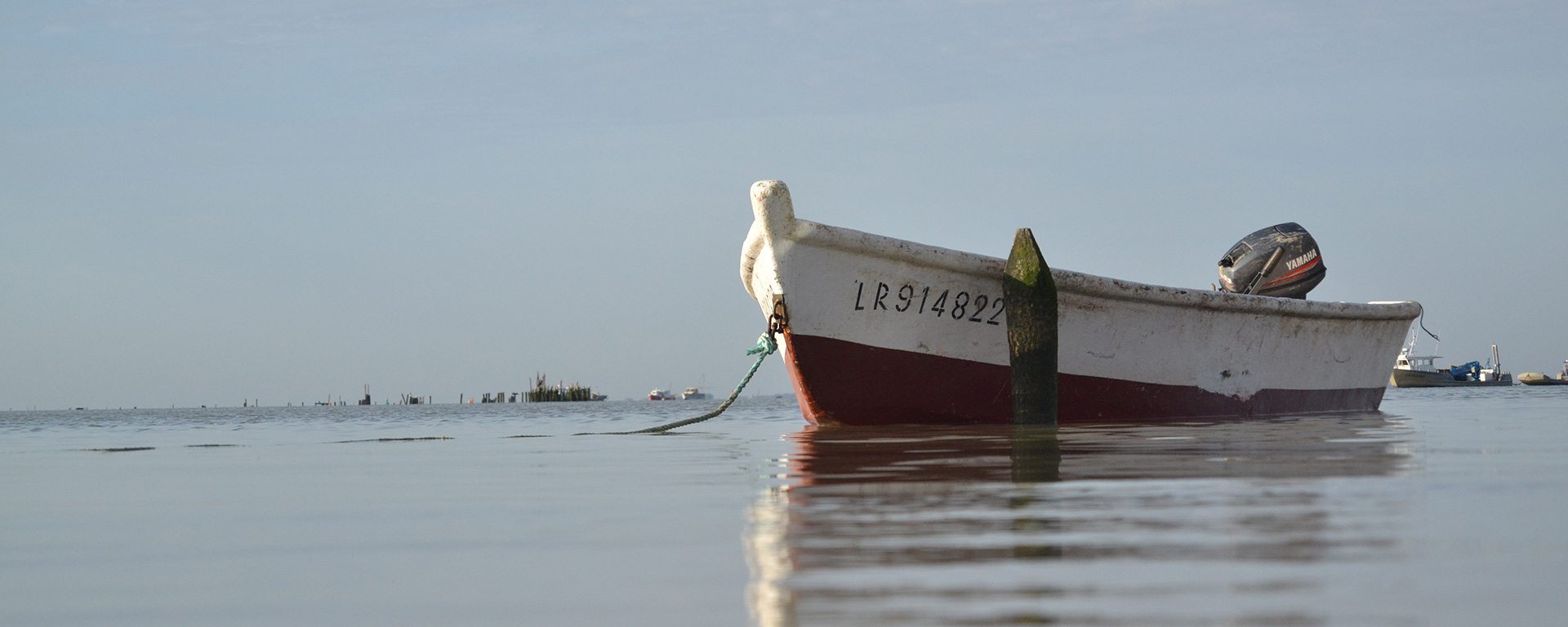
Extending over 4 hectares and classified as a National Nature Reserve, the Baie de l'Aiguillon is a treasure trove of maritime biodiversity. You then enter a magical place between land and sea, between fresh water and salt water, a transition between the continent and the ocean. According to the tides, the Bay of Aiguillon is submerged and then uncovered, drawing a lunar landscape marked by vast expanses of mudflats and salt meadows.

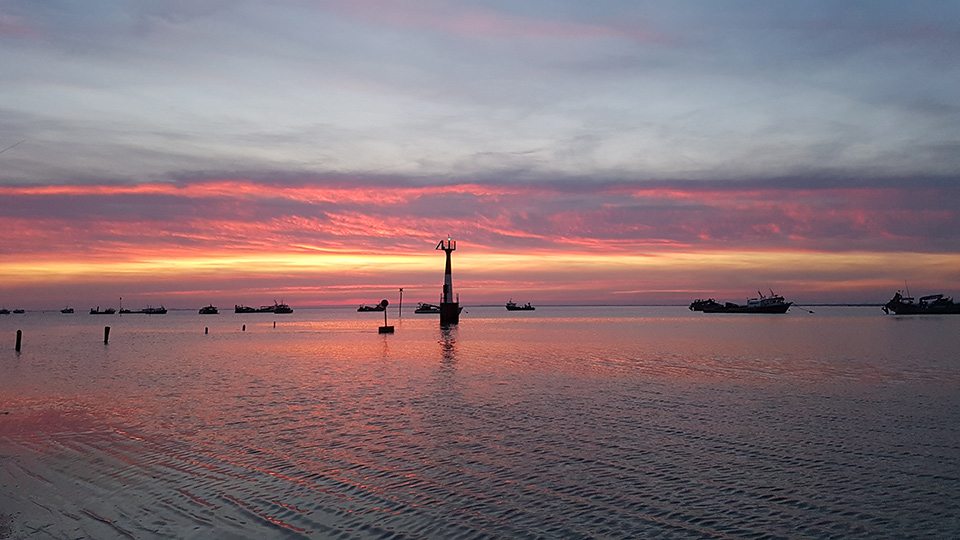
Aiguillon Bay, naturally wild
This coastal area in the north of Charente-Maritime extends about twenty kilometers from La Rochelle, at the mouth of the Sèvre Niortaise, vertebral column of the Marais Poitevin delimiting the departments of Vendée and Charente-Maritime. The territory is little urbanized and gives way to unspoiled nature where pebble beaches, cliffs, marshes and cereal fields rub shoulders. This paradise of migratory birds offers landscapes very different from the fine sandy beaches and expanses of pine trees in the south of Charente-Maritime.
A bit of history
The current appearance of the bay is due to the dykes which succeeded one another and which silted up a large part of the old “Gulf of Pictons” to create the Marais Poitevin. Composed mainly of mudflats and salt meadows, Aiguillon Bay, pool shared with the neighboring department of Vendée, extends over nearly 5 hectares. With production reaching 000 tons per year, the site is also the first mussel pond in France. From the port du pavé in Charron, you can observe the producers of bouchot mussels returning to their boats, and immortalize the lights of the sunset.
bird paradise
Its humid and maritime character makes it a natural paradise for migrating and wintering birds. True migratory crossroads for birds from northern Europe, Siberia or Canada, Aiguillon Bay has been classified as national nature reserve and is coveted by bird watchers. Autumn is a particularly popular period for experts and amateurs when almost 100 wintering birds come to find refuge there. the port of Pavé of Charron or the Pointe Saint-Clément in Esnandes are good observation points all year round.
The opinion of the local counter
We take ourselves for an ornithologist for a few hours and we take out the binoculars to observe the birds in the bay. Here, you learn to distinguish gulls from gulls and, if you are patient, you can also see cranes, waders or oystercatchers.

Can I fish in Aiguillon Bay?
As Baie l'Aiguillon is classified as a national nature reserve, fishing there is highly regulated. Fishing on foot is authorized during the day only, from sunrise to sunset. The sizes and quantities allowed for each species are very specific. You have been warned!, shore fishing is prohibited à less than 25 meters concessions of marine cultures (flat or raised oyster beds, bouchots, fish lock, etc.) even if these are unused. We don't forget to get the regulations for fishing on foot as well as the tide times at our local counters!
Put on your boots, grab your basket, of course check the tide times and head to Pointe Saint-Clément in Esnandes for some shore fishing.
Zoom : And why not learn about plaice fishing?
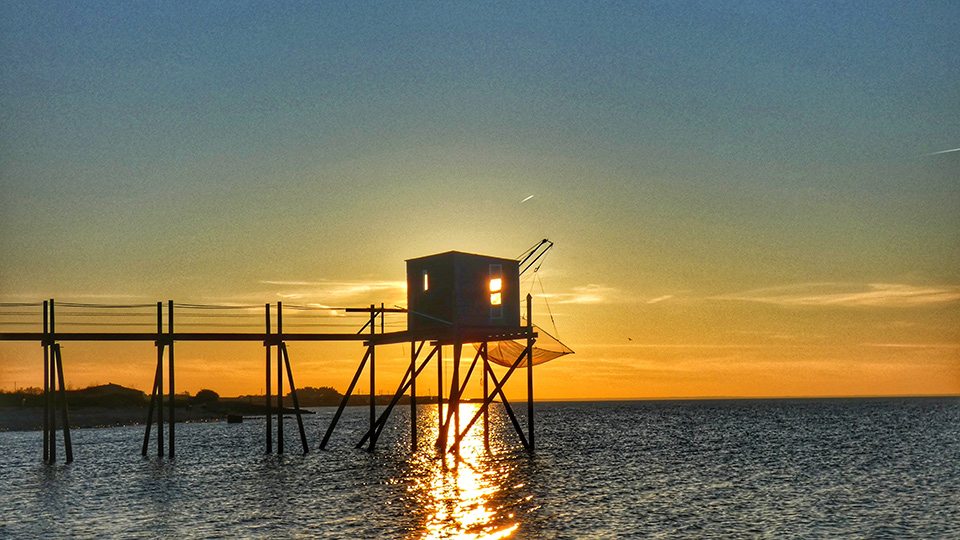
A carrelet is a wooden cabin with a large net that fishermen lower using a winch. You can rent the Esnandes educational plaice, which can accommodate up to 10 people, for the duration of a tide, i.e. 6 hours. Treat yourself to a breath of fresh air and indulge in shrimp, bass or mullet fishing.